

Dhamma wisdom : ค้นหาหนังสือธรรมะ หน้า 8 / 14
หน้าหนังสือทั้งหมด
142
The Path to Enlightenment: Understanding Dhammakāya
the knowledge arising from cognition may be erroneous.
The knowledge arising from 'knowing', by contrast, de-
pends on the Dhammakāya — it is knowledge based on
true wisdom such as the Four Noble Trut
This text discusses the distinction between knowledge gained through cognition and that which arises from true wisdom based on the Dhammakāya. It details the bodhisatva's rigorous meditation practice

107
ความสำคัญของชีวิตมนุษย์
uman life is
very important. Although
humans' live for only a
short span of seventy
years, he can do so much!
Man can decide whether
to produce good deeds
or bad deeds, unlike other
beings who cannot
uman life is very important. Although humans' live for only a short span of seventy years, he can do so much! Man can decide whether to produce good deeds or bad deeds, unlike other beings who cannot

36
การค้นหาความหมายของชีวิต
WISDOM
I dedicated my life to be a wandering monk, as a contribution to Buddhism.
I set forth by myself,Walking from Bangkok to the South of Thailand.
One night, on the way,
I was sitting in meditatio
WISDOM I dedicated my life to be a wandering monk, as a contribution to Buddhism. I set forth by myself,Walking from Bangkok to the South of Thailand. One night, on the way, I was sitting in meditatio
40
Chaiboon's Journey to Dhamma through Meditation
Even during the early hours of the morning, at 3 a.m. when most of his friends slept, Chaiboon would wake up to meditate because of favourable silence, and his body had just enough rest. He would medi
Chaiboon, despite the early hour of 3 a.m., dedicates himself to meditation amidst the silence when his friends sleep. Initially, he meditates alone but invites close friends to join him at Wat P TANA
173
Luang Phaw Dhammajayo's Teachings on Buddhism and Inner Peace
Luang Phaw Dhammajayo is compassionate. He cares the others, wishing all people to be happy and attain inner peace. He has established DMC channel in which he gives teachings to propagate Buddhism dai
Luang Phaw Dhammajayo promotes compassion and the teachings of the Buddha through the DMC channel, guiding individuals towards inner peace and happiness. His approach emphasizes non-violence, making i
24
Dhamma for Laypersons and the Four Levels of Beauty
A person who has the Dhamma for Laypersons
(Gharāvās-dhamma) must display four regular habits:
1. Habit of Responsibility – Whatever the task at hand, he must do it to the best of his ability, in t
A person who follows the Dhamma for Laypersons exhibits four habits: responsibility, self-training, endurance, and sacrifice. These traits ensure self-reliance and leadership within families. In marri
11
The Teachings of Luang Por Dattajeevo
Suzanne Jeffrey
Life, of course, is not as neat as these teachings are laid out for you, and we do not always meet
life’s stresses, or sufferings, head-on with a Dhamma teaching. When I become frustr
Suzanne Jeffrey reflects on her journey of understanding Dhamma teachings through the wisdom of Luang Por Dattajeevo. She shares insights into dealing with life's challenges, the importance of mindful
23
The Path to Nibbana and the Challenges of Lay Life
dure six arduous years of self-mortification before discovering Niramisasukha. During this period, the Buddha came close to death more than once, but when he finally found true happiness, he chose to
After six years of self-mortification, the Buddha discovered Niramisasukha, close to death multiple times. He emphasized living by the Dhamma for true happiness, urging ordination to escape worldly po

28
The Rebirth of Tambadathika: A Lesson in Dhamma
28
OCTOBER
Kasiha Readam
After the discourse, Tambadathika accompanied Venerable Sariputta for some distance and then returned home. On his way home a cow (actually a demon in the guise of a cow) g
After the death of Tambadathika, who was gored by a demon disguised as a cow, the Buddha reveals his rebirth in the Tusita deva world. Despite a life of evil deeds, Tambadathika attained *anūṇa maha*
20
The Journey of Enlightenment: The Buddha's Reflections
1
Overview
Introduction
After the Enlightenment which transformed Siddhartha Gotama into the Lord Buddha beneath the Bodhi tree on the banks of the River Nerañjāra, Bodhgavā on the full moon night of
After achieving Enlightenment under the Bodhi tree, the Buddha spent 28 days in contemplation to absorb the bliss and understand the Dhamma. With encouragement from Brahmā Sahampati, he decided to sha
107
परम ध्यान और आत्मा का केंद्र
(sleeps).
Luang Phaw Wat Paknam explained that the ability to bring our mind to a standstill at this centre of the body is what we call ‘majjhima’ or ‘centering’. When the mind comes to a standstill
लुआंग फॉ वट पाकनम ने समझाया कि शरीर के केंद्र पर ध्यान लाने की क्षमता को 'मध्यम' कहा जाता है। यह वह बिंदु है जहाँ मन सद्भाव में आता है, और इसे अच्छे या बुरे के संदर्भ में नहीं रखा जा सकता है। इसके द्व
42
The Noble Eightfold Path and the Factors of Enlightenment
kings must accept with obeisance. This is because the Noble Eightfold Path is a supreme and noble practice.
2. A Wide Ocean: It can be compared to the wide ocean into which all rivers must flow. The
The Noble Eightfold Path is presented as a supreme practice in Buddhism, comparable to a vast ocean into which all rivers flow, embodying the essential Factors of Enlightenment. It comprises the Four
12
Dhamma for Laypersons: Building a Stable Family
Although the solution is not simple, that does not mean
there is no path to correct and prevent them from occurring. If
each person realizes what the heart of the family is and
everyone takes the best
The text discusses a method for fostering a stable family as taught by the Lord Buddha through 'Dhamma for Laypersons', which includes truthfulness (sacca), self-control (dama), endurance (khanti), an
192
Understanding Respect in Buddhism
be summed up in the following proverb: One rotten apple spoils
the whole barrel. If people think this way, they can harm
Buddhism unknowingly. This is certainly not the nature of a
Buddhist. Buddhists
The text illustrates the negative impact of generalizing about monks based on misconduct and emphasizes the importance of critical analysis as taught by the Buddha. It highlights a discussion between
194
Understanding Merit in Buddhism
should think in this way. As long as the monks do not seriously
break the monastic discipline, you should think that you are
giving alms to them to replenish their energy for Dhamma
study and meditati
This text emphasizes the importance of giving alms to monks to replenish their energy for Dhamma study and meditation. It advises that both givers and receivers gain merit. It discusses the impact of
12
The Purpose of Dhammakaya Temple
this mode of thought mankind creates many different types
of research. And, to our great disappointment, most fail to
have lasting success.
The Dhammakaya Temple was established with the
aim to make i
The Dhammakaya Temple aims to develop its members into good people through understanding the Dhamma. It has expanded globally, with an increasing number of visitors practicing to eliminate suffering a
185
Glossary of Dhamma Terms
Part Seven: Appendixes
Danamaya: see Dana
Dhamma: split into three main meanings: First: "Pure
Nature" within existence and our relationship to it; Second:
the teachings of how to get to our "Pure Nat
This appendix provides definitions for crucial terms related to Dhamma, including the meaning of Dhama, the significance of giving sermons, the process of forming right outlooks, and the concept of su
60
Journey to Joy: A Personal Exploration of Dhamma
Journey to Joy
60
60
the world, I had an opportunity to study Dhamma
further. At the centre in Tokyo, there was a need
to translate Dhamma into Japanese. A member
of the staff at the Tokyo centre, who
In this narrative, the author recounts their journey in understanding Dhamma while in Tokyo. The story highlights the challenges of meditation, from physical discomfort to the slow-learning process. W
49
The Tathāgata and Brahmā: A Semantic Analysis
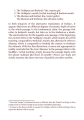
1. The Tathāgata and Brahmā,48 the creator god
2. The Tathāgata's mouth (verbal teaching) & Brahmā mouth.
3. The dhamma and Brahmā, the creator god; or
The dhamma and Brahman, the ultimate reality.
I
This passage delves into the nuanced relationships between the Tathāgata and Brahmā, highlighting the semantic layers present in verbal teachings. It contrasts the Tathāgata's mouth with Brahmā's, ind
78
Understanding Dhammakāya in Early Theravādin Context
The research approach employed in the present study is intended as a more direct, analytical and inclusive one than previous approaches to this question. It is more direct in that it set off by docume
This study analyzes the term dhammakāya through close readings of Pali canonical passages, revealing that it relates not only to the Buddha but also to other noble figures like Paccakabuddhas and disc